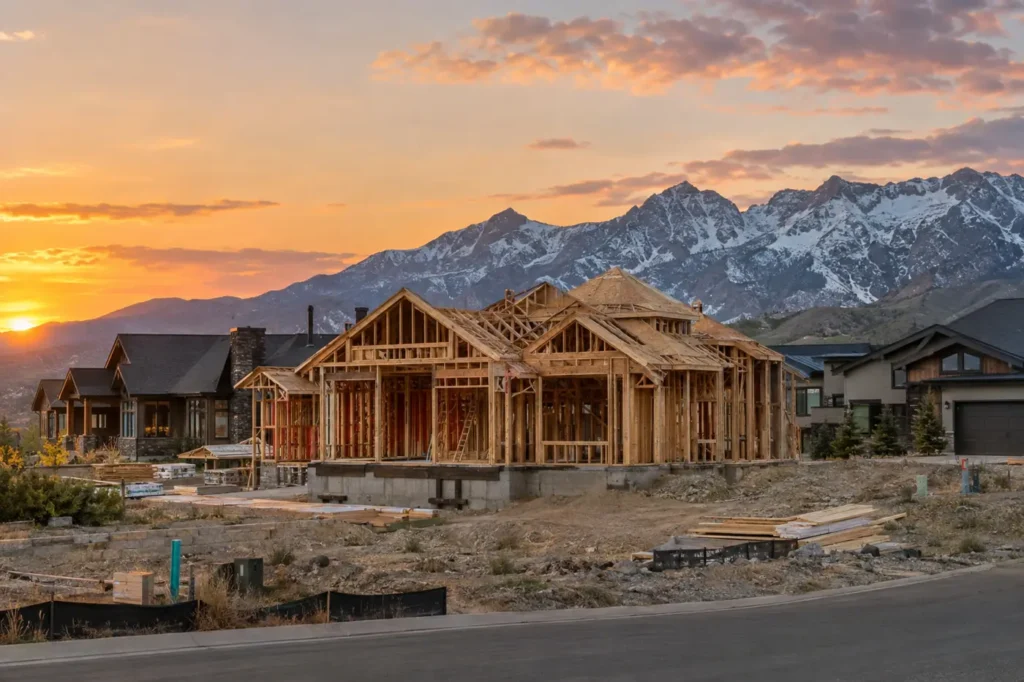
New Construction Incentives: What Is the Real Deal?
Builder incentives can be valuable, but compare the entire economic package: price, financing, upgrades, closing costs, appraisal, timeline and lender restrictions.


Builder incentives can be valuable, but compare the entire economic package: price, financing, upgrades, closing costs, appraisal, timeline and lender restrictions.

Paying points can lower a mortgage rate, but the decision depends on upfront cost, monthly savings and how long you keep the loan.

Leading indicators can help frame scenarios, but they do not remove uncertainty. A useful predictive model shows inputs, history, calibration and error.

Assessed value, taxable value and the tax bill are different concepts. Buyers should verify the current parcel record and understand how a sale or exemption change could affect future taxes.

A renovation can create value, but only after budget, downtime, financing, contingency and resale risk are accounted for. Discount-to-list is not the same as built-in equity.

Relocation costs are bigger than the mortgage. Compare taxes, insurance, utilities, HOA, commuting, snow, maintenance and lifestyle costs before choosing a Utah market.

Base rent is only one piece of occupancy cost. Compare common-area charges, utilities, tenant improvements, renewal terms, guarantees and exit obligations.

Cost-per-square-foot numbers are meaningless until you know what is inside the numerator and denominator. Separate land, site work, hard costs, soft costs, financing and finish scope.

Not every dollar spent before listing returns a dollar at closing. Decide whether work solves a buyer objection, expands the buyer pool or simply adds cost and delay.

Homeownership is not automatically the right answer. Short tenure, unstable income, weak reserves or unresolved location needs can make waiting the stronger decision.
A lower monthly payment can still create a higher lifetime cost if fees, term reset or cash-out are ignored. Compare the full refinance structure.
A changing median sale price can reflect what sold, not only what each home became worth. Separate price movement from changes in property mix before drawing conclusions.

Active listings show competition, under-contract listings show buyer movement, and closed sales show verified outcomes. Mixing them as if they are equal can distort a CMA or market report.
Regional hazard maps are useful screening tools, but they are not parcel-level engineering opinions. Use them to identify questions, then verify the property itself.

A deal that works only at the optimistic assumptions is not resilient underwriting. Stress-test rent, occupancy, expenses, financing, capital needs and exit value.
A nearby project can change noise, access, traffic and views before it delivers any future amenity. Buyers should verify the current phase and realistic construction path.
A commercial property can look attractive on cap rate and still carry serious tenant or capital risk. Separate income yield, lease quality and replacement needs.
ADU eligibility is not a statewide yes-or-no question. Verify jurisdiction, zoning, lot conditions, utilities, parking and recorded restrictions for the exact property.
The view may be obvious; the site-work bill is not. Slope, soils, retaining, utilities, access and snow can turn an attractive lot into a complex build.
A trophy property can be a lifestyle asset, investment asset or both—but the buyer pool on exit may be much narrower than the purchase experience suggests.
When a listing sits, the cause is usually some combination of price, exposure, condition, access, presentation and competition. Diagnose before cutting blindly.
The buy-versus-wait decision should not depend on one mortgage-rate forecast. Use tenure, reserves, payment, property fit and multiple future scenarios.






FEATURED · INSIDE UTAH REAL ESTATE
October 5, 2026 · Inside Utah Real Estate · Adam’s Market Insights
Paying points can lower a mortgage rate, but the decision depends on upfront cost, monthly savings and how long you keep the loan.
A trophy property can be a lifestyle asset, investment asset or both—but the buyer pool on exit may be much narrower than the purchase experience suggests.
Ski-in/ski-out is not one standardized property feature. Verify the route, lift dependence, seasonality, legal access, snow conditions and owner obligations before paying a premium.
A luxury home often requires a professional bench. Here is how to evaluate builders, architects, designers, property managers and specialty service providers in Park City.
Compare Park City, Heber and Midway through housing, resort access, land, daily life, commute, community feel and luxury ownership tradeoffs.
A neutral school-research framework for families relocating to Park City: boundaries, private and charter options, commute, enrollment, calendars and address-level verification.
Compare new construction and resale luxury homes in Park City by replacement cost, timeline, site risk, warranty, design, location and resale flexibility.
Before underwriting nightly rental income in Park City, verify jurisdiction, zoning, license requirements, HOA rules, financing and insurance.
A Park City second home has costs beyond principal and interest. Build a realistic annual ownership budget before you decide what purchase price feels comfortable.
Builder incentives can be valuable, but compare the entire economic package: price, financing, upgrades, closing costs, appraisal, timeline and lender restrictions.
Paying points can lower a mortgage rate, but the decision depends on upfront cost, monthly savings and how long you keep the loan.
Not every dollar spent before listing returns a dollar at closing. Decide whether work solves a buyer objection, expands the buyer pool or simply adds cost and delay.
Homeownership is not automatically the right answer. Short tenure, unstable income, weak reserves or unresolved location needs can make waiting the stronger decision.
A lower monthly payment can still create a higher lifetime cost if fees, term reset or cash-out are ignored. Compare the full refinance structure.
When a listing sits, the cause is usually some combination of price, exposure, condition, access, presentation and competition. Diagnose before cutting blindly.
The buy-versus-wait decision should not depend on one mortgage-rate forecast. Use tenure, reserves, payment, property fit and multiple future scenarios.
The same seller concession budget can create very different buyer outcomes depending on whether it becomes a price cut, closing-cost credit or approved rate buydown.
Assessed value, taxable value and the tax bill are different concepts. Buyers should verify the current parcel record and understand how a sale or exemption change could affect future taxes.
A renovation can create value, but only after budget, downtime, financing, contingency and resale risk are accounted for. Discount-to-list is not the same as built-in equity.
Regional hazard maps are useful screening tools, but they are not parcel-level engineering opinions. Use them to identify questions, then verify the property itself.
A deal that works only at the optimistic assumptions is not resilient underwriting. Stress-test rent, occupancy, expenses, financing, capital needs and exit value.
Low dues do not automatically mean a healthy association. Owners need to understand operating costs, reserves, capital obligations and the likelihood of special assessments.
Four common investment metrics answer four different questions. Here is how to separate property operations, purchase price, leverage and time.
A condo purchase includes the unit and a share of the association’s financial, insurance and governance risks. These are the documents and questions to review before your deadline.

For a mountain property, organize access, insurance, water, drainage, roof, heating, wildfire, snow, HOA, utility, and maintenance questions before they become post-closing surprises.
Relocation costs are bigger than the mortgage. Compare taxes, insurance, utilities, HOA, commuting, snow, maintenance and lifestyle costs before choosing a Utah market.
A nearby project can change noise, access, traffic and views before it delivers any future amenity. Buyers should verify the current phase and realistic construction path.
School names in a listing are not a substitute for district verification. Boundaries, programs, enrollment rules and future changes are address-specific.
Use the same framework for work routes, services, recreation, property types, and ownership questions.